One of the most misunderstood markets for betting, but also one of the most accessible for bettors developing real analytical skills. To understand the mechanics of election betting odds and to find value opportunities in referendum betting markets it is crucial to understand the unique mechanisms that differentiate political wagering from traditional sports betting.
Online election betting sites present excellent opportunities for experienced bettors, as political markets sometimes experience large mispricing when public sentiment diverges from an accurate probability assessment.
When it comes to political betting, the guide frameworks that allow systematic analysis can help bettors to find value positions where the consensus price is not reflecting fundamental factors influencing actual electoral outcomes.
The basic difference between political wagering and sports betting has to do with information availability, as well as the psychological bias of both bettors and odds makers. Political betting is very different from sports markets because prediction depends on complex socioeconomic, demographic, and psychological factors, sometimes invisible to casual analysis.
Experienced political bettors said markets can identify where sentiment-based pricing creates value opportunities not available in traditional betting markets. You can use these differences to position yourself strategically on platforms that offer odds on election betting and referendum betting markets.
Political Betting 101: How Political Betting Operates in Today’s Betting Markets
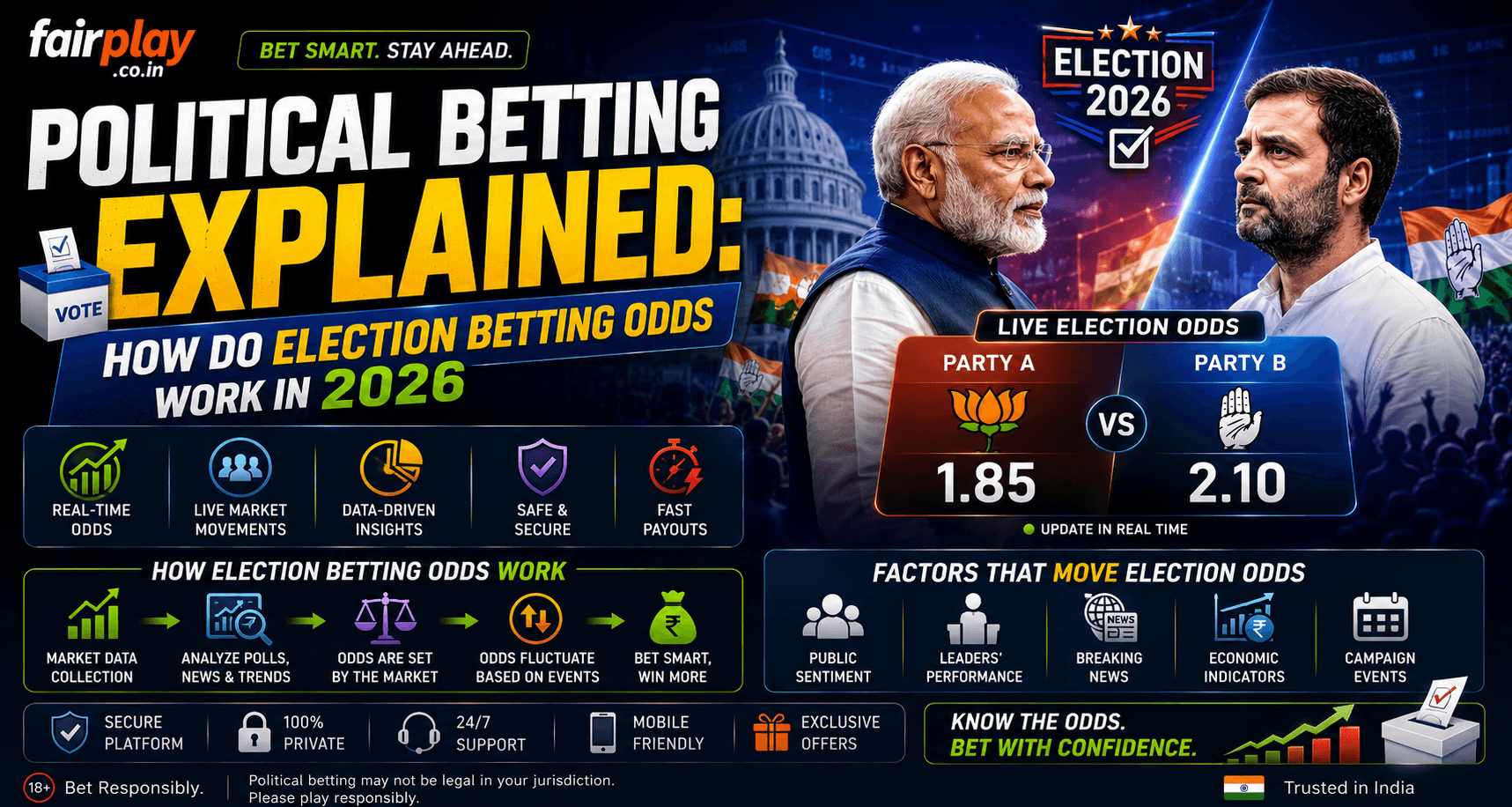
Political betting guide structures are based on the fact that election betting odds are bookmaker probability estimates converted into decimal or fractional styles that set potential payback.
Odds of 2.0 are 50 percent probability, meaning an equal chance that either outcome occurs. Odds of 1.5 are 67 percent probability, meaning the bookmaker expects that outcome to be substantially more likely. The first step in determining whether the price in referendum betting markets is realistic or whether it differs significantly enough to indicate value is still the conversion of odds to probability.
Online election betting platforms display these odds constantly updated as new information emerges, affecting probability assessments, creating dynamic markets where early positioning sometimes captures value, disappearing as consensus develops.
The conversion between odds and probability enables comparative analysis determining whether specific political outcome pricing offers value relative to realistic probability assessments.
A candidate priced at 2.0 odds receives 50 percent probability assessment, but if analytical evidence suggests 55 percent actual probability, positive expected value emerges justifying wagering. Political betting explained analysis requires developing independent probability assessments then comparing against available election betting odds to identify situations where pricing diverges from reality.
This systematic approach transforms political wagering from gambling into analytical positioning based on genuine competitive advantage.
Information Factors Affecting Election Betting Odds Accuracy and Market Pricing
How political betting works depends substantially on information quality regarding voter sentiment, demographic shifts, candidate performance, and external events affecting electoral dynamics. Political betting guide analysis requires monitoring polling data, approval ratings, campaign developments, and economic indicators influencing electoral outcomes.
Unlike sports betting where historical records and statistical databases provide extensive information, political wagering requires synthesizing current information sources including news, polling organizations, and social media sentiment analysis. Referendum betting markets depend particularly on understanding specific policy positions and public opinion trends affecting likely electoral results.
The timeliness of information becomes crucial in political markets where external events sometimes dramatically shift odds overnight. A political scandal, economic announcement, or diplomatic development might substantially alter election betting odds within hours requiring rapid analytical repositioning.
Online election betting platforms reflect these updates quickly as sharp bettors incorporate new information and odds adjust accordingly. Political betting explained frameworks require staying current with information development recognizing that delayed analysis sometimes misses opportunities where odds adjust before analytical consensus fully forms.
Psychological Bias and Public Sentiment in Referendum Betting Markets Pricing
Political betting guide analysis often identifies mispricing driven by public sentiment diverging from realistic probability assessment, with bookmakers sometimes adjusting pricing to balance betting volume rather than reflecting genuine probability.
During elections, public enthusiasm sometimes creates excessive favorite pricing for popular candidates while unpopular candidates face pessimistic underpricing.
How political betting works at the market-making level involves balancing betting liability requiring odds adjustments maintaining bookmaker profitability rather than purely reflecting probability. Understanding this distinction enables identification of value where election betting odds reflect liability management rather than genuine outcome probability.
Emotional wagering sometimes creates systematic biases in referendum betting markets where voters express preference through wagering despite contrary objective analysis. Bookmakers recognizing these sentiment-driven biases sometimes deliberately misprice markets capturing wagering volume from emotionally-motivated bettors while offering value to contrarian analytical bettors.
Political betting explained for sophisticated practitioners involves recognizing when market pricing reflects sentiment-driven bias creating value for objective probability analysis. Online election betting platforms sometimes feature substantial sentiment-driven mispricings where popular candidates face excessive favorite pricing while underdogs receive underpricing despite objective evidence suggesting tighter races.
Polling Data Analysis and Election Betting Odds Assessment Methods
Political betting guide frameworks emphasize understanding polling methodologies and limitations when using polls for election betting odds assessment. Different polling organizations employ varying methodologies sometimes producing substantially different results from identical electorates, creating uncertainty affecting probability estimates. How political betting works in relationship to polling involves recognizing that polls represent snapshots at specific moments rather than predictions, sometimes diverging from final electoral results.
Understanding polling limitations including margin of error, respondent bias, and methodology differences enables more accurate probability assessment than treating polls as definitive outcome predictions.
Historical polling accuracy analysis reveals patterns of systematic bias where certain organizations consistently overestimate particular candidate support while underestimating others.
Understanding these historical polling biases enables adjusted probability assessment improving accuracy beyond simple poll averaging. Referendum betting markets pricing sometimes reflects excessive confidence in preliminary polls requiring adjustment recognizing that final results sometimes diverge substantially from early polling. Online election betting platforms attract sophisticated bettors developing polling analysis expertise enabling differentiation between reliable polls and those featuring systematic limitations.
Campaign Momentum and Trend Analysis in Political Betting Explained Markets
Election betting odds sometimes fail accounting for campaign momentum where polling trends reveal whether candidates gain or lose support velocity affecting likely final outcomes. Political betting guide analysis incorporating trend assessment sometimes identifies value where election betting odds reflect static polling snapshots rather than dynamic momentum.
Candidates showing consistent polling improvement sometimes face underpricing as odds remain based on earlier polls, while those showing declining momentum sometimes receive overpricing. Understanding momentum through detailed polling trend analysis sometimes identifies value positioning where odds diverge from trajectory-adjusted probabilities.
Campaign event impacts including debates, scandals, or policy announcements sometimes create significant momentum shifts affecting electoral dynamics. How political betting works in relationship to campaign events involves recognizing that initial event impact sometimes proves temporary while other events create lasting momentum changes. Referendum betting markets sometimes overreact to short-term campaign developments adjusting odds excessively before returning toward fundamental probabilities.
Online election betting provides opportunities for bettors recognizing when temporary volatility creates value where fundamental probabilities diverge from emotionally-driven odds movements.
Demographic Analysis and Geographic Factors in Referendum Betting Markets Assessment
Political betting explained requires understanding demographic voting patterns and geographic distribution affecting electoral outcomes through constituency-specific analysis rather than simple national aggregation.
Election betting odds sometimes overweight national polling while underweighting specific geographic factors determining electoral outcomes in systems requiring geographic distribution of support. Political betting guide analysis incorporating detailed demographic and geographic assessment sometimes identifies value where national-level polling diverges from outcome-determining regional dynamics.
Different regions sometimes show dramatically different voting patterns requiring sophisticated analysis recognizing that national aggregates sometimes obscure regional realities.
Age, education, urban/rural divides, and ethnic composition sometimes predict voting patterns more accurately than simple polling aggregates. How political betting works at sophisticated analytical levels involves building detailed demographic models predicting outcomes incorporating these factors.
Online election betting platforms offer opportunities for bettors developing demographic expertise enabling probability assessments diverging substantially from simple polling-based odds. Understanding regional swing dynamics and demographic shift trends sometimes identifies value where referendum betting markets fail accounting for these factors in outcome probabilities.
Risk Management and Bankroll Approach in Online Election Betting Positioning
Political betting guide frameworks emphasize disciplined risk management recognizing that political wagering sometimes features substantial uncertainty despite careful analysis.
Unlike recurring sports events enabling refined probability assessment through extensive data, political elections occur infrequently creating analytical challenges from limited historical information. How political betting works in practical implementation requires conservative position sizing managing uncertainty while capturing value where election betting odds offer genuine advantage.
Bettors risking excessive capital on single political positions face unsustainable losses from occasional analytical errors despite generally sound methodology.
Position sizing typically involves risking 1-3 percent of bankroll per election or referendum reflecting the inherent uncertainty distinguishing political wagering from more data-rich sports markets. Political betting explained for successful practitioners emphasizes that consistent long-term profitability requires surviving occasional significant errors through conservative position management.
Online election betting platforms enable distributed wagering across multiple political markets managing overall portfolio risk while capturing value across various opportunities. Referendum betting markets sometimes feature better value-to-risk ratios than major elections enabling selective focus on particularly favorable situations.
Final Thoughts: Strategic Political Betting Explained for Value Identification
Understanding political betting explained fundamentals including how political betting works, analyzing election betting odds, and recognizing value in referendum betting markets enables systematic positioning where informed analysis converts into consistent profitability. Bettors are in good stead to trade in markets that sometimes have large mispricings, and political betting guide frameworks that incorporate analysis of information, awareness of psychological biases, and understanding of demographics can help.
One can bet on elections online . And the better you get at analyzing elections , the better your chances of winning become . These are not consensus driven , sentiment based wagers .
This is why political betting is so complicated . This is what differentiates successful practitioners from casual bettors who treat political markets like sports wagers .
Developing skill in assessing election betting odds and analyzing referendum betting markets requires persistent effort in tracking information sources and honing analytical techniques. Systematic political bettors who create guides are well-positioned to capture value that emotion-driven bettors miss out on through disciplined analytical positioning.
Political betting has become one of the fastest-growing online markets in 2026, with bettors tracking election trends, candidate popularity, and live odds updates. On Fairplay, election betting odds work similarly to sports betting, where market movements reflect public sentiment, breaking news, and political developments. Lower odds usually indicate a stronger favorite, while higher odds offer bigger potential returns. From national elections to global political events, Fairplay gives users real-time betting markets, competitive odds, and smooth live updates. Understanding how odds change during campaigns can help bettors make smarter predictions and improve their overall political betting strategy in 2026.